Africville - Shauntay Grant
111,55 lei
+4,46 lei înapoiSuma de cashback este aproximativă. Suma finală va fi vizibilă la finalizarea achiziției pe site-ul vânzătorului.Preț stabilneschimbat din 8 oct.
8 oct.azi
Descriere
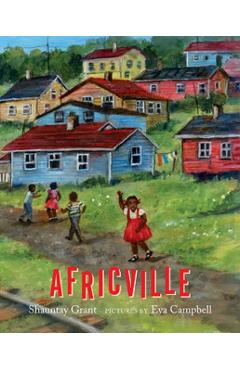
A powerful reimagination of what it was like to live in Africville, Halifax, Nova Scotia, in the 1960s, presented through the eyes of a young girl. Full color. n nWhen a young girl visits the site of Africville, in Halifax, Nova Scotia, the stories she's heard from her family come to mind. She imagines what the community was once like --the brightly painted houses nestled into the hillside, the field where boys played football, the pond where all the kids went rafting, the bountiful fishing, the huge bonfires.
Coming out of her reverie, she visits the present-day park and the sundial where her great- grandmother's name is carved in stone, and celebrates a summer day at the annual Africville Reunion/Festival.n nAfricville was a vibrant Black community for more than 150 years. But even though its residents paid municipal taxes, they lived without running water, sewers, paved roads and police, fire-truck and ambulance services. Over time, the city located a slaughterhouse, a hospital for infectious disease, and even the city garbage dump nearby.
In the 1960s, city officials decided to demolish the community, moving people out in city dump trucks and relocating them in public housing.n nToday, Africville has been replaced by a park, where former residents and their families gather each summer to remember their community.n
Caracteristici
Cum primești cashback-ul
Cumperi prin YolozApeși „Cumpără” și finalizezi comanda pe LIBRIS.
Confirmat în până la 60 de zileDupă ce trece perioada de retur a magazinului.
Mai multe din Juvenile Fiction la LIBRIS
aceeași categorie, același magazin · 4% înapoi la toate






 LIBRIS4% înapoi
Africville - Shauntay Grant
111,55 lei
+4,46 lei înapoiSuma de cashback este aproximativă. Suma finală va fi vizibilă la finalizarea achiziției pe site-ul vânzătorului.Preț stabilneschimbat din 8 oct.
8 oct.azi
111,55 lei+4,46 lei înapoi
Descriere
A powerful reimagination of what it was like to live in Africville, Halifax, Nova Scotia, in the 1960s, presented through the eyes of a young girl. Full color. n nWhen a young girl visits the site of Africville, in Halifax, Nova Scotia, the stories she's heard from her family come to mind. She imagines what the community was once like --the brightly painted houses nestled into the hillside, the field where boys played football, the pond where all the kids went rafting, the bountiful fishing, the huge bonfires.
Coming out of her reverie, she visits the present-day park and the sundial where her great- grandmother's name is carved in stone, and celebrates a summer day at the annual Africville Reunion/Festival.n nAfricville was a vibrant Black community for more than 150 years. But even though its residents paid municipal taxes, they lived without running water, sewers, paved roads and police, fire-truck and ambulance services. Over time, the city located a slaughterhouse, a hospital for infectious disease, and even the city garbage dump nearby.
In the 1960s, city officials decided to demolish the community, moving people out in city dump trucks and relocating them in public housing.n nToday, Africville has been replaced by a park, where former residents and their families gather each summer to remember their community.n
Caracteristici
Mai multe din Juvenile Fiction la LIBRIS
aceeași categorie, același magazin · 4% înapoi la toate