Veredus Olympus Vento Peesbeschermers Zwart -
1.016,46 lei
+25,41 lei înapoiSuma de cashback este aproximativă. Suma finală va fi vizibilă la finalizarea achiziției pe site-ul vânzătorului.Preț stabilneschimbat din 17 oct.
3 oct.azi
Descriere
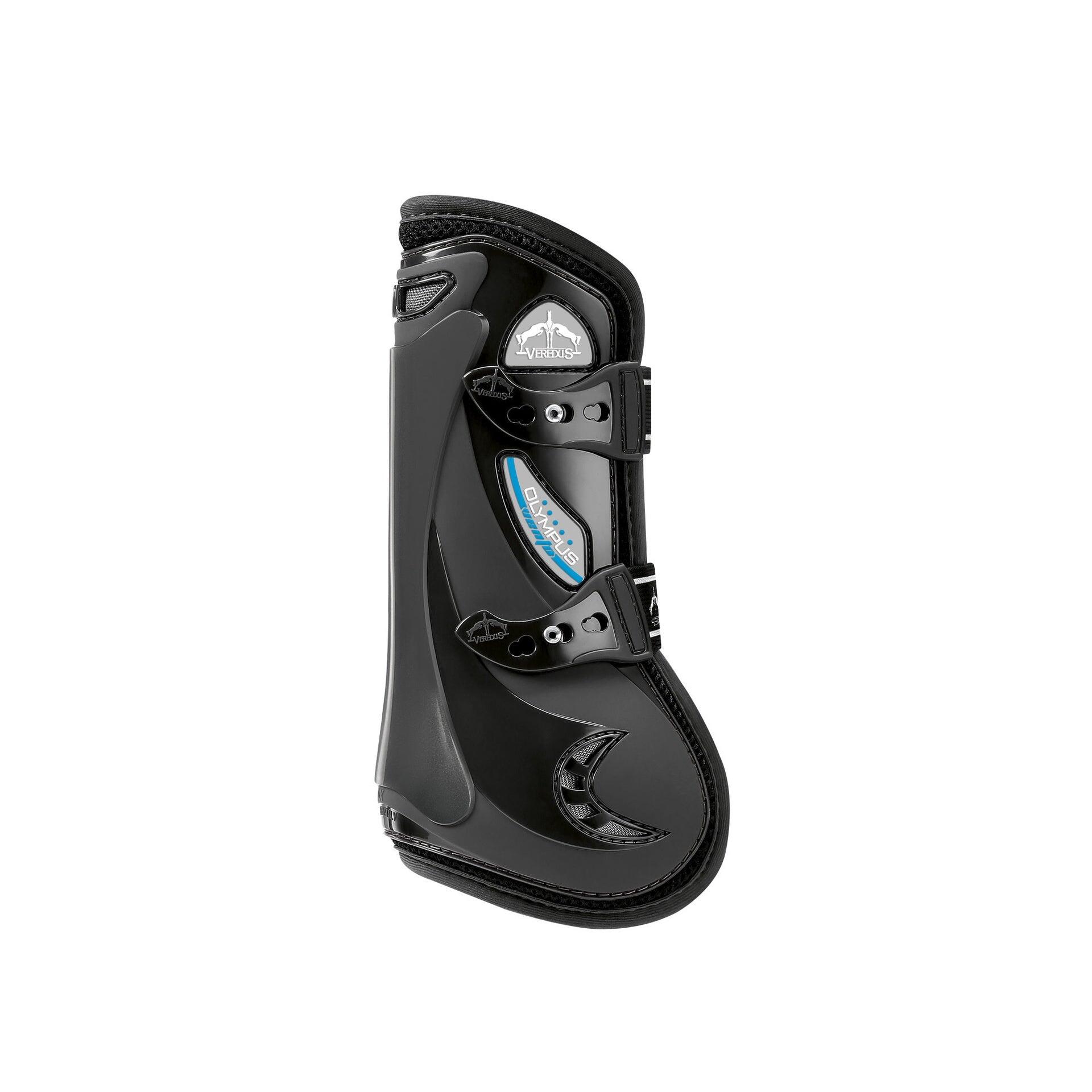
The Olympus Vento is the Veredus front-leg model for anyone who wants the air system of the Vento range without carbon. A Double Density shell with a shock-absorbing EVA film lies over the tendon and the front of the fetlock; underneath it, ventilation channels carry heat and moisture away. Meant for showjumpers who train daily and kit out several horses.
About these tendon boots What this model is made for. Veredus describes the Olympus Vento as a tendon boot for the front legs for showjumping. It is the model for anyone who wants the air system of the Vento range but has no need of a carbon zone.
That makes it suited to daily jumping training and course days, and to riders who ride several horses and need several sets. How the air system works. This is the heart of the model.
Heat coming off the leg passes through a layer of micro-perforated Aerox neoprene and then spreads out into a 3D mesh fabric with ventilation channels. Fresh air comes in at the bottom through inlets; that air carries the heat upwards, where it leaves through the outlet grille. So the flow runs both horizontally and vertically.
The result: heat and moisture do not hang about under the shell. Beyond that, Veredus makes no statement about it. What it shields with.
The outer shell is anatomically shaped and built in Double Density: the plastic has different densities per zone, firmer where the chance of a knock is high and more supple where the boot has to bend. The damping layer over the tendon and the front of the fetlock is a film of EVA, a flexible shock-absorbing plastic. That is the distinction from the Carbon Gel Vento: there, carbon and Nitrexgel form the hard layer, here it is EVA.
The air system is the same in both cases. Fastening and what you may expect. It closes with a quick-release tip, so you get the boot on and off quickly, even with gloves on.
Two limitations come with it. This is a model for the front legs: behind, a fetlock boot belongs, with a shorter shell and a different shape, and those shapes are not interchangeable. And even with ventilation, a closed boot with a hard outer side stays warmer than an open work boot, so take it off after work.
Competition and dressage. The current international showjumping rules set no requirements for the shape of tendon boots on the front legs. The only hard limit is the weight: everything on one leg together may weigh no more than 500 grams, including when wet.
Veredus does not state the weight per boot, so you cannot do that sum in advance. In the international dressage competition arena, boots and bandages are not permitted and have to come off before you enter the space around the arena; so there, this is a model for warming up and training.
Caracteristici
CategorieEchitație
MagazinDECATHLON
Cum primești cashback-ul
Cumperi prin YolozApeși „Cumpără” și finalizezi comanda pe DECATHLON.
Confirmat în până la 60 de zileDupă ce trece perioada de retur a magazinului.
 DECATHLON2,5% înapoi
Veredus Olympus Vento Peesbeschermers Zwart -
1.016,46 lei
+25,41 lei înapoiSuma de cashback este aproximativă. Suma finală va fi vizibilă la finalizarea achiziției pe site-ul vânzătorului.Preț stabilneschimbat din 17 oct.
3 oct.azi
1.016,46 lei+25,41 lei înapoi
Descriere
The Olympus Vento is the Veredus front-leg model for anyone who wants the air system of the Vento range without carbon. A Double Density shell with a shock-absorbing EVA film lies over the tendon and the front of the fetlock; underneath it, ventilation channels carry heat and moisture away. Meant for showjumpers who train daily and kit out several horses.
About these tendon boots What this model is made for. Veredus describes the Olympus Vento as a tendon boot for the front legs for showjumping. It is the model for anyone who wants the air system of the Vento range but has no need of a carbon zone.
That makes it suited to daily jumping training and course days, and to riders who ride several horses and need several sets. How the air system works. This is the heart of the model.
Heat coming off the leg passes through a layer of micro-perforated Aerox neoprene and then spreads out into a 3D mesh fabric with ventilation channels. Fresh air comes in at the bottom through inlets; that air carries the heat upwards, where it leaves through the outlet grille. So the flow runs both horizontally and vertically.
The result: heat and moisture do not hang about under the shell. Beyond that, Veredus makes no statement about it. What it shields with.
The outer shell is anatomically shaped and built in Double Density: the plastic has different densities per zone, firmer where the chance of a knock is high and more supple where the boot has to bend. The damping layer over the tendon and the front of the fetlock is a film of EVA, a flexible shock-absorbing plastic. That is the distinction from the Carbon Gel Vento: there, carbon and Nitrexgel form the hard layer, here it is EVA.
The air system is the same in both cases. Fastening and what you may expect. It closes with a quick-release tip, so you get the boot on and off quickly, even with gloves on.
Two limitations come with it. This is a model for the front legs: behind, a fetlock boot belongs, with a shorter shell and a different shape, and those shapes are not interchangeable. And even with ventilation, a closed boot with a hard outer side stays warmer than an open work boot, so take it off after work.
Competition and dressage. The current international showjumping rules set no requirements for the shape of tendon boots on the front legs. The only hard limit is the weight: everything on one leg together may weigh no more than 500 grams, including when wet.
Veredus does not state the weight per boot, so you cannot do that sum in advance. In the international dressage competition arena, boots and bandages are not permitted and have to come off before you enter the space around the arena; so there, this is a model for warming up and training.
Caracteristici
CategorieEchitație
MagazinDECATHLON